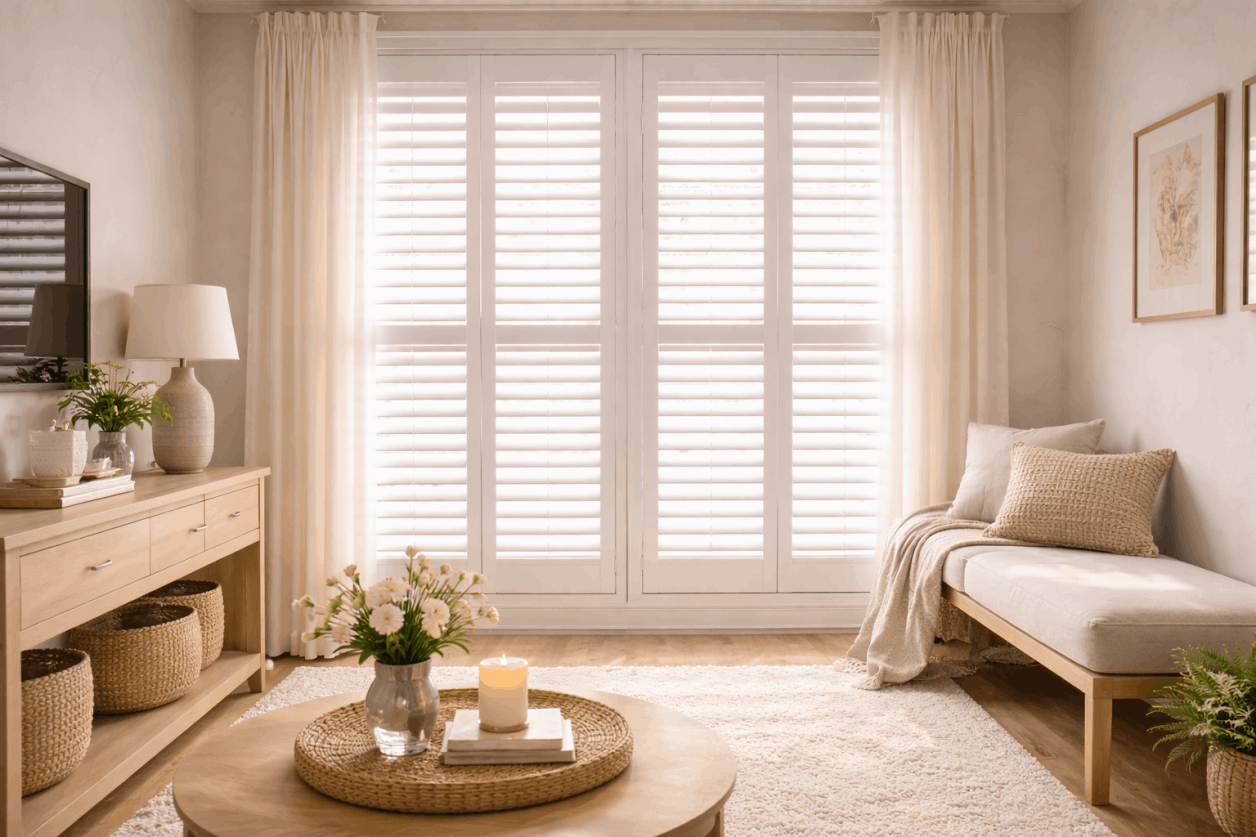
Choosing interior shutters isn’t just about style or colour. It’s a long-term decision that affects comfort, light control, insulation and the overall value of your home.
Yet many homeowners make avoidable mistakes during the selection process — mistakes that can lead to unnecessary costs, poor performance or long-term disappointment.
In this guide, we highlight the most common mistakes people make when choosing shutters and explain how to avoid them with confidence.
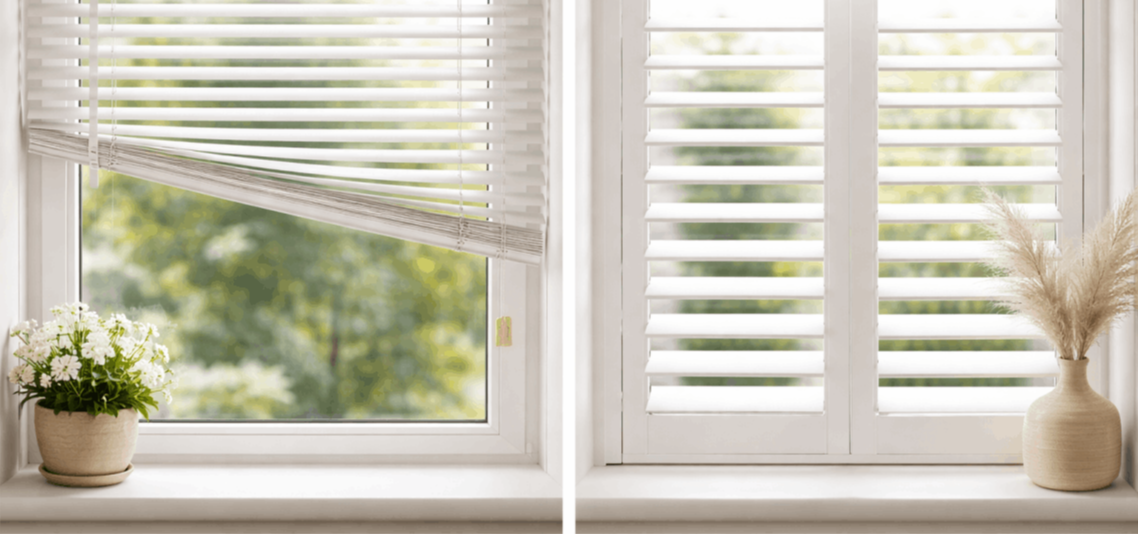
The cheapest option often becomes the most expensive in the long run. Low-quality materials, weak hardware and poor craftsmanship can lead to premature wear, operational issues and a shorter lifespan.
Shutters are a long-term feature in your home, and cutting corners on quality can affect both performance and appearance over time.
The right approach:
Focus on material quality, construction standards and warranty — not just the initial price.
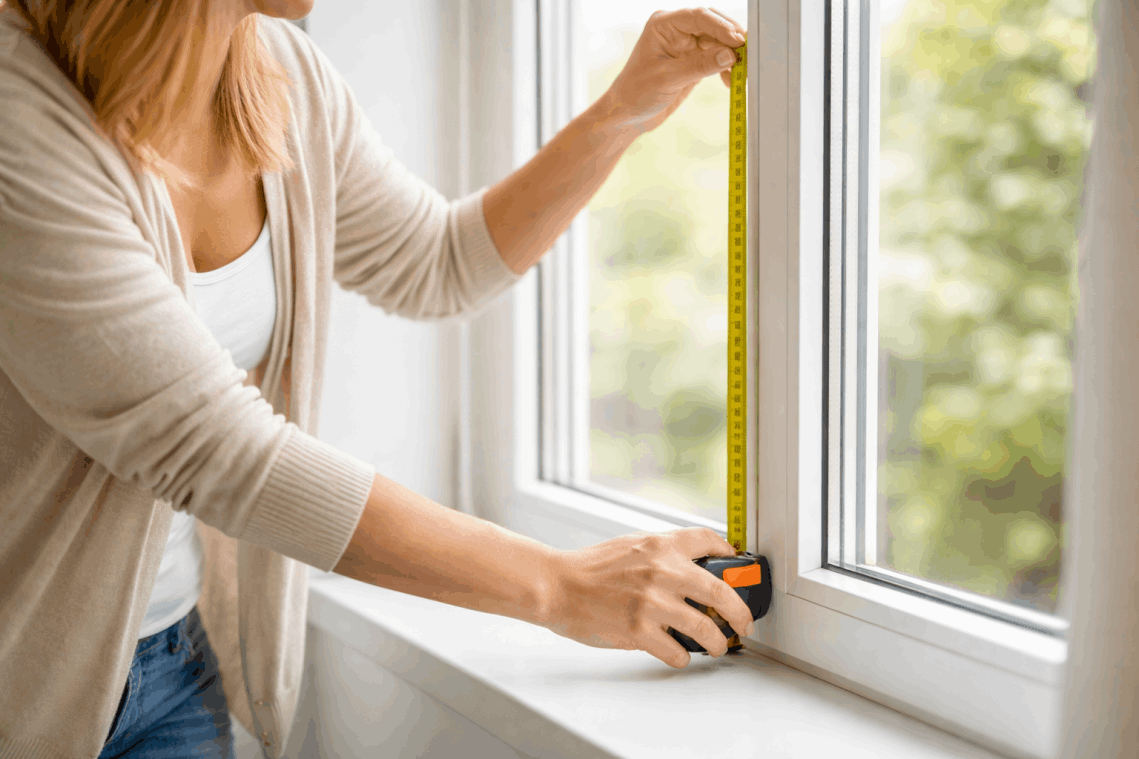
Incorrect measuring is one of the most common causes of fitting issues and customer complaints. Even a few millimetres can make a noticeable difference in how shutters sit within the frame.
Poorly fitted shutters can affect both appearance and functionality.
The right approach:
Follow a precise measuring guide or consider professional measurement to ensure a perfect fit.
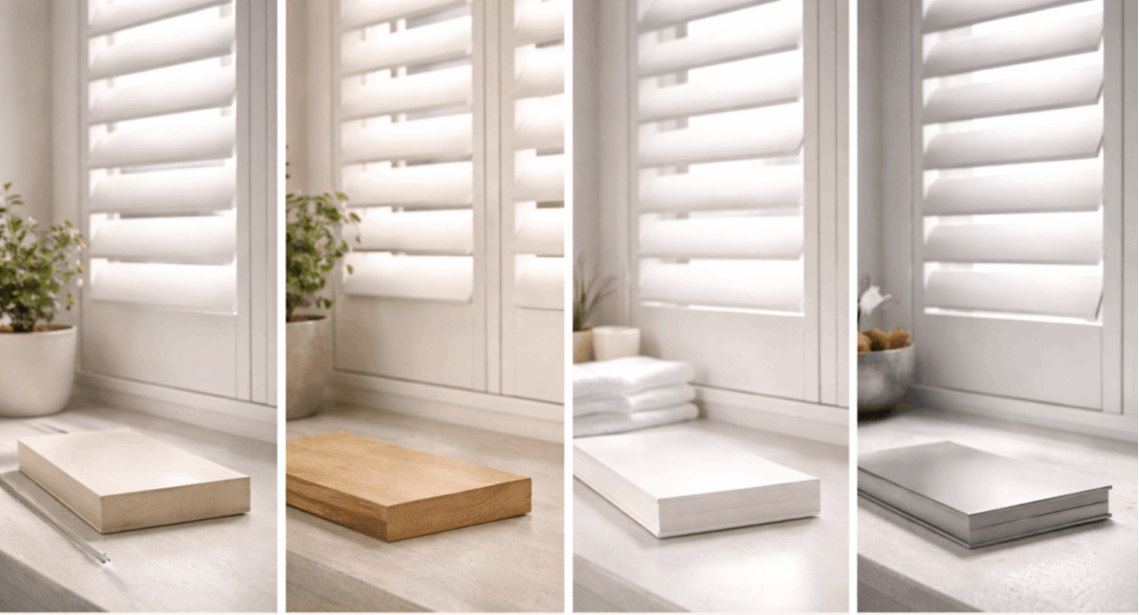
Not every shutter material is suitable for every space. For example, MDF is not ideal for bathrooms or areas exposed to high humidity.
Selecting the wrong material can reduce durability and lead to long-term performance issues.
The right approach:
Choose materials based on room conditions, humidity levels, expected use and design preference.
👉Learn more about choosing the right material in our complete guide to shutter materials.
Many homeowners concentrate mainly on aesthetics and overlook how shutters will perform in everyday use.
Important functional factors include:
• Light control
• Privacy
• Thermal insulation
• Ease of operation
Choosing purely based on looks can lead to practical limitations once the shutters are installed.
The right approach:
Consider how the shutters will be used daily and prioritise both function and design.
👉Learn more about How Shutters Improve Energy Efficiency
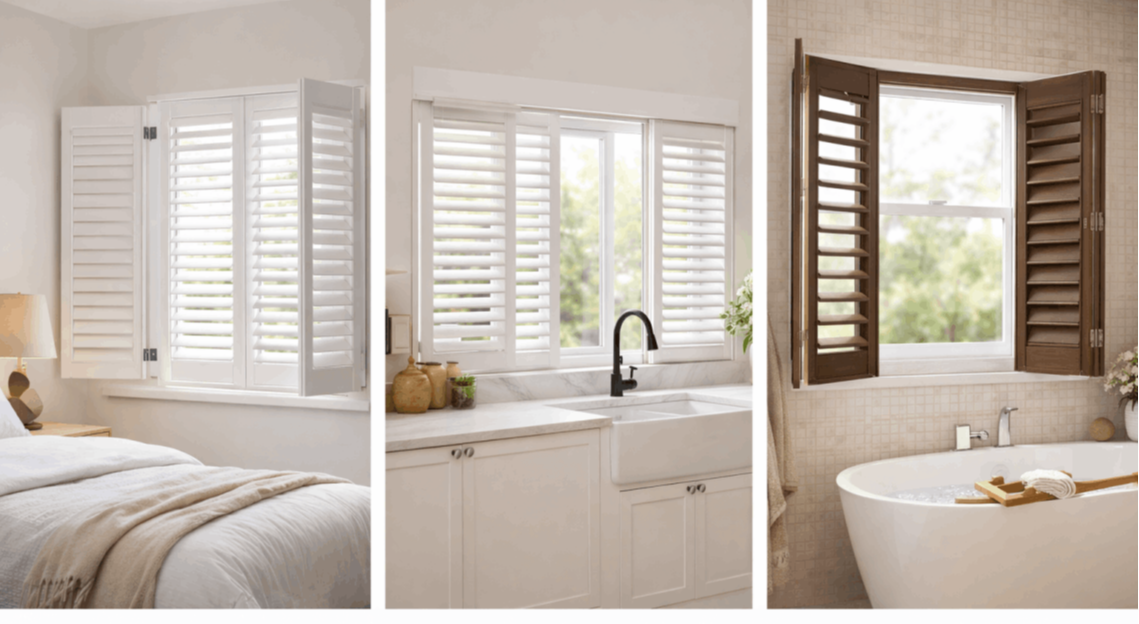
Not every shutter style is suitable for every space. What works well in a bedroom may not be ideal for a kitchen or bathroom.
For example, blackout solutions are often preferred in bedrooms, while moisture-resistant materials are essential in bathrooms.
The right approach:
Match the shutter style and material to the function of the room.
Even high-quality shutters can underperform if they are poorly installed.
Incorrect fitting may affect alignment, smooth operation and long-term durability.
The right approach:
Professional installation ensures precise alignment, structural stability and long-lasting performance.
The best way to avoid costly errors is through expert guidance, accurate measurement and a solution tailored specifically to your space.
Choosing shutters should be a structured process — from selecting the right material and style to ensuring precise installation.
At Shutters by Balaz, we guide you through every step — from the initial consultation to final professional installation — ensuring a smooth and confident experience.
✔ Personal, tailored approach
✔ Professional advice and product guidance
✔ Precise measurement
✔ Made-to-measure manufacturing
✔ Professional installation
✔ Fair and transparent pricing
👉 Explore more about How the Shutter Ordering Process Works
The most common mistake is choosing based on price alone without considering material quality, room conditions and long-term performance. Shutters are a long-term feature and should be selected with durability in mind.
Accurate measurement is essential for a perfect fit. Even small errors can affect alignment and functionality. Professional measurement helps avoid costly adjustments later.
DIY installation is possible if measurements are precise and you have the right tools. However, professional installation ensures optimal alignment, smooth operation and long-term durability.
Composite shutters are typically the safest choice for humid environments due to their moisture-resistant construction.
Yes. Some materials are easier to maintain than others.
Composite and aluminium shutters generally require minimal upkeep — occasional dusting and wiping with a damp cloth is usually sufficient. Wooden shutters may require slightly more care depending on room conditions, while MDF shutters should be kept away from excessive moisture.
Choosing a material without considering long-term maintenance can affect overall satisfaction and durability.
Well-chosen interior shutters can enhance your home for decades. Avoid costly mistakes and make a confident decision with expert guidance.
AI Website Generator